
Today, the nonprofit work environment is defined by uncertainty and complexity, demanding constant adaptation. Organizations face technological shifts such as AI, climate and geopolitical uncertainty, and leadership transitions, while demand for their services is rising and the funding landscape is narrowing.
Sounds like they could use some specialized help, right? Maybe n 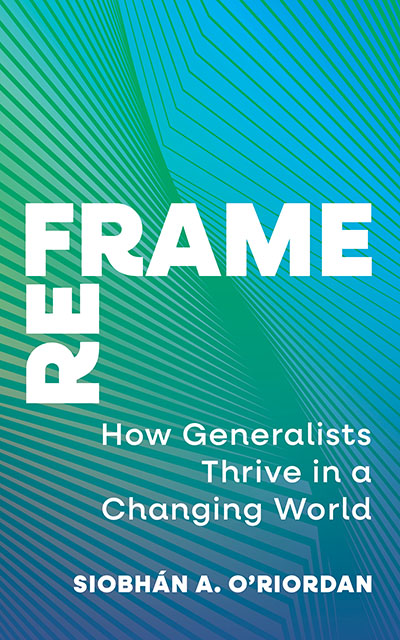 ot.
ot.
“It is exactly the time we are in that needs generalists,” says Siobhán O’Riordan, a seasoned social sector professional with experience at the National Park Foundation and the Council on Foundations. “Generalists embrace ambiguity by getting curious and creative in solving problems, allowing for adaptability and discernment during times of change.”
Seven years ago, O’Riordan had a conversation that would change her perspective on her career. During a heart-to-heart about her non-linear career path, a colleague said, “You know, you’re a generalist.”
“I didn’t really know what that was at the time,” O’Riordan admits. But as they continued conversations on the topic, it made more and more sense. “It was the first time that I really felt seen and recognized,” she says. The conversations inspired a LinkedIn post that went “kind of viral” and led to her new book, Reframe: How Generalists Thrive in a Changing World.
O’Riordan credits a 2016 Bridgespan article about generalists and their value to an organization, written by Sue Dahling Sullivan, then Citi Performing Arts’ chief of staff. “Sue’s column and David Epstein’s best-selling book Range: Why Generalists Triumph in a Specialized World put generalists on the map as essential players during times of change,” says O’Riordan.
Generalists are gaining traction in nonprofits, particularly in roles such as chief of staff and chief operating officer. But it’s still unclear how generalists advance within their organizations and when organizations need them most.
We interviewed O’Riordan to explore what it means to be a generalist, how generalists can help nonprofits thrive in uncertain times, and why the topic still feels so relevant.
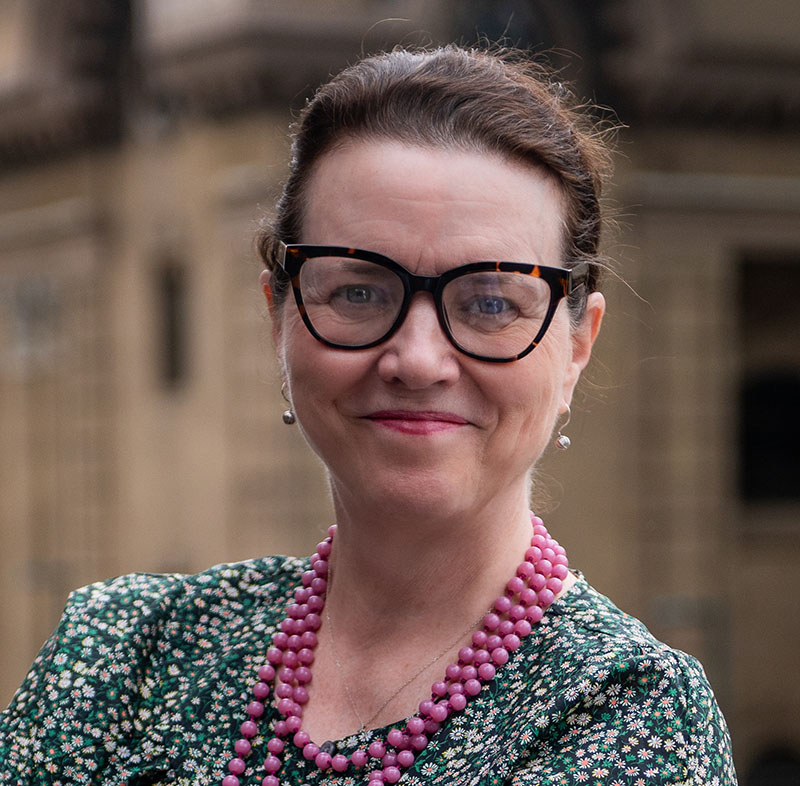 Siobhán O’RiordanWhat exactly is a “generalist”?
A generalist is a jack of all trades, someone whose skills and capabilities go wide across functional areas, but not necessarily deep in one area. By contrast, specialists go deep in one area.
This specialization is important; nonprofits need experts in, say, technology and HR compliance. But they also need generalists who can bring wide-ranging curiosity and the ability to make creative connections to help organizations solve problems across functions.
How can a generalist help an organization weather—even thrive during—instability?
Nonprofits typically execute on mission-aligned strategies, yet the fast pace of change can upend the best-laid plans.
“Every nonprofit organization and individual is experiencing the pressure to adapt, which is exactly where generalists excel with their learning mindset and openness to failure,” O’Riordan says. She adds that generalists’ ability to not only embrace ambiguity, but also discern possible pathways forward, can address immediate gaps or larger systemic questions.
“Generalists are often the glue in an organization, excelling at translating change across teams, functions, and priorities,” says O’Riordan. “Many generalists are ‘people persons’ and know how to work across functions and connect dots in ways that build cultures of trust, learning, and collaboration,” which is important during times of external instability.
When should a nonprofit hire a generalist versus a specialist?
Specialists and generalists are “essential collaborators, each providing clear value,” O’Riordan writes in her book. “It is not an either-or situation; it’s about striking an intentional balance.”
Specialists have skills and expertise that fulfill a function, so consider them when you need deep expertise in an area where precision is critical and the problem is well-defined. A generalist’s strengths are particularly suited to changing environments; if an organization is facing uncertainty or rapid change, problems are hard to define, and the work requires cross-functional coordination.
But what does this look like?
One example is the hospitalist, as O’Riordan shares in her book. Only formalized as a role in the late 1990s, the hospitalist is the generalist of hospital settings. As medicine and patient care became more complicated, physicians increasingly specialized. But problems arose when patients had complex needs across different departments and providers. O’Riordan explains: “How is care prioritized if, for example, a patient is diabetic, has heart disease, a broken femur, and traumatic brain injury? That’s where the hospitalist matters. They have a wider, if not expert, understanding of medicine, and their focus on the whole patient allows them to prioritize care.” They’re the glue that connects specialist care.
In nonprofits, there is often someone doing something similar—filling gaps, connecting dots, trying new approaches—yet without expectation, permission, title, or role.
How can nonprofits retain and engage generalists?
While some generalists are high-profile contributors, such as entrepreneurs, executive directors, and chiefs of staff, many generalists feel invisible, unseen, or undervalued in their organizations. Misaligned job descriptions, limited promotion pathways, and economic penalties for non-linear careers can also put them at a disadvantage, O’Riordan says. In a 2023 report from OC Tanner, half of the 36,000 employees interviewed from 20 countries identified as generalists. Yet 56 percent believed there was no clear career pathway, and 35 percent felt excluded from promotions.
“While a large share of workers identify as generalists, they lack recognition or right-sized development and growth because organizations are structured around and reward specialization,” says O’Riordan. “By elevating awareness of generalists, we can develop their capabilities and better deploy their talents across organizations.”
In order to retain and engage generalists, O’Riordan says, leaders need to shift from assessing skills to understanding strengths, from asking “what can you do?” to “how do you think and operate?” and to redesign performance management to measure collaboration, learning, influence, and even “successful failures,” not just outputs. To do their best work, generalists need in-house champions who understand them and give them the freedom to learn and explore, and to work across issues, pain points, or organizations.
To build a workplace where both generalists and nonprofits thrive, O’Riordan suggests that leaders shift their perspective to understand why generalists succeed in the first place. “Generalists are not people who say ‘I build, I led, I did, I managed.’ They are people who use words like collaborated, catalyzed, incentivized,’ and ‘bridged.’”