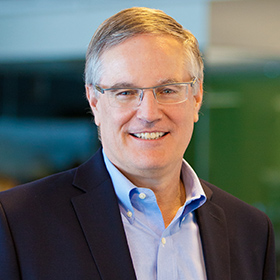
Foreword
Over the past few years, when people have asked me about Bridgespan’s strategy as it relates to philanthropy, I invariably conclude with some version of: “When you step back, the meta-question we are always grappling with is: how do you help and motivate philanthropists to give more?” When my conversation partner inevitably follows up with, “What is the answer?”, I offer a word salad sprinkled with (I hope) a few interesting observations, and end by saying, “I’m humbled by how hard it is to change giving patterns in philanthropy.”
"While there has been some encouraging progress, I am still humbled by how little we understand about what it will take to realize more giving, even among people committed to giving away a large share of their wealth."
What makes this question difficult is that philanthropy is deeply personal and voluntary. The old saw that “if you know one foundation, you know one foundation” applies even more to ultra-wealthy individuals. Personal beliefs, values, faith traditions, cultural identities, family dynamics, as well as the structure and liquidity of a person’s wealth, each can affect whether, how, and how much a person gives. While these factors provide important context, they are difficult to influence directly and are not the primary focus of this essay. Instead, I focus here on understanding the assumptions, norms, structures, and initiatives that shape a person’s philanthropy and that may be amenable to change in ways that unlock greater giving.
This topic has grown in importance as the wealth of this small group has soared and as questions intensify about how society's most important opportunities and challenges will be addressed. Recent shifts in government funding flows have only heightened the stakes.
Philanthropy has been a focus for The Bridgespan Group since our founding 25 years ago as a nonprofit organization (half of Bridgespan’s client work is with nonprofits and half with funders). For our first 15 years, those efforts centered largely on how to "give smart," as my co-founder Tom Tierney put it in the title of his 2011 book with Joel Fleishman. Over the past decade, another crucial question has emerged: how to unlock "greater giving" among the ultra-wealthy. (In 2018, we captured our thinking on this question in Four Pathways to Greater Giving.)
While there has been some encouraging progress, I am still humbled by how little we understand about what it will take to realize more giving, even among people committed to giving away a large share of their wealth. This essay reflects on a range of efforts to accelerate philanthropy among major US donors, examining where those efforts stand and what we can learn from them. Based on conversations sparked by early drafts, I’m sure people will interpret the evidence and examples in the pages that follow in different ways—and may even disagree about whether philanthropy is “slow” at all. That is okay. This is not an attempt to offer THE answer, but rather to lift up signals—some weak, some strong—as we collectively try to make sense of what is happening.
Introduction
One of the most striking stories of this era is the massive accumulation of wealth among the very few. The wealth held by the richest 0.1 percent of Americans now exceeds the GDP of every country in the world except two (China and the United States). Since 2010, this group’s share of the nation’s wealth has grown by more than 35 percent, rising from 10.6 percent to 14.4 percent of total wealth. In 2024 alone, the wealth of the richest 19 US households increased by $1 trillion. And the anticipated wave of wealth from the IPOs of generative AI companies will further widen this gap.
For a while, it looked like an accompanying story would be the unlocking of commensurate large-scale philanthropy. Indeed, nearly 18 years ago, the book PhilanthroCapitalism: How Giving Can Save the World, by Economist editors Matthew Bishop and Michael Green, heralded its arrival. In 2010, Bill Gates, Melinda French Gates, and Warren Buffett launched the Giving Pledge, and scores of billionaires pledged to channel at least half their wealth into philanthropy.
"This essay explores what I call "slow philanthropy"—a pattern in which giving by the ultra-rich lags far behind the ambitions they express. "
But that is not what has happened so far. Among US households with $500 million or more in assets, annual giving has held steady at 1.2 percent of their assets. To be clear, given the rapid pace of wealth accumulation, a flat rate still means giving by this group has increased significantly. Yet, that growth has also left a massive gap between their giving to date and the long-term philanthropic ambitions many hold. A decade after PhilanthroCapitalism was published, another book captured a very different sentiment: Winners Take All: The Elite Charade of Changing the World, by Anand Giridharadas.
About half of the nation’s roughly one thousand billionaires are 70 or older, so a great deal of money will soon flow somewhere. But it feels less certain today than it did 15 years ago that this wealth will ultimately flow into philanthropy. Furthermore, while some commentators anticipate a “third wave” of philanthropy with the emergence of new billionaires and even trillionaires riding the AI boom, those hopes may be dashed if philanthropy continues on its current trajectory.
This essay explores what I call “slow philanthropy”—a pattern in which giving by the ultra-rich lags far behind the ambitions they express. While important innovations are helping philanthropy move faster in some respects, overall flows remain modest relative to the scale of resources and expressed intent. Drawing on decades of experience working with philanthropists on their giving strategies and research (including several studies from The Bridgespan Group), I reflect on a set of societal and donor-level frictions that influence philanthropic behavior in ways that are not always fully visible, even to those experiencing them.
My aim here is not to advance a particular set of recommendations, but to explore the underlying dynamics that keep capital from moving at greater scale and with greater speed. Until we better understand what is holding philanthropy back, we won’t make meaningful progress in helping people bring their giving more fully in line with their highest aspirations. This gap between aspiration and action is consequential not only for philanthropy and its lofty potential but also, importantly, for the people and organizations whose work strengthens communities, expands opportunity, and improves lives.
To download the full long-form essay, please fill out the form below. We do not share any individual information we collect, and we use the data to learn more about the audiences we reach. If you would rather not provide any information, you can download the essay directly. Thank you!