Executive Summary
Nonprofits in Southeast Asia are a vital and growing force, playing a critical role in addressing urgent social and environmental needs. Yet new evidence from our study of three Southeast Asian nations paints a picture of nonprofits caught in a cycle of constrained growth: they have enough to keep the doors open, but the infrastructure around them and the nature of funding they receive limit their ability to innovate and build the organisational strength needed to endure and best serve communities.
This was the core finding of a recent Bridgespan Group survey that received over 160 responses from nonprofit leaders in Indonesia, Malaysia, and Singapore, supplemented by in-country workshops with 45 nonprofit leaders and 20 stakeholder interviews. The analysis revealed that the challenges nonprofits face are systemic rather than due to individual operational lapses. This pointed to five shifts in the practice of funders and other sector stakeholders that would strengthen nonprofits’ ability to pursue their missions:
- Change the nature of funding to be long-term and flexible.
- Target investments to develop nonprofit leaders, staff, and boards.
- Support smaller organisations and those outside major cities.
- Establish shared data and support services to strengthen nonprofits’ effectiveness.
- Strengthen pathways for nonprofits and government to work together on shared priorities.
The full report provides examples of how these shifts have been implemented in practice, illustrating how they can strengthen nonprofits and enable them to reach more people in need. Together, they offer a practical agenda for addressing the most pressing systemic challenges facing the sector:
- Seven in 10 cite the lack of multiyear, unrestricted funding as a “highly” or “critically” important constraint.
- More than 40 percent have fewer than six months of operating reserves.
- Half report that they do not receive sufficient flexible funding to cover their nonprogramme costs.
- More than 80 percent identify leadership development and staff recruitment and retention as major obstacles to their success.
- Smaller nonprofits headquartered outside Java in Indonesia and Peninsular Malaysia are three to five times more likely to have fewer than three months of reserves.
Opportunities for nonprofits, funders, and intermediaries to work together on the proposed practice shifts come at a pivotal moment for Southeast Asia.
Private wealth has expanded rapidly over the past decade, along with the philanthropic ambition of wealth holders. Yet the growing pool of capital and rising philanthropic ambition have not translated into a strong nonprofit sector equipped for sustained, scalable impact.
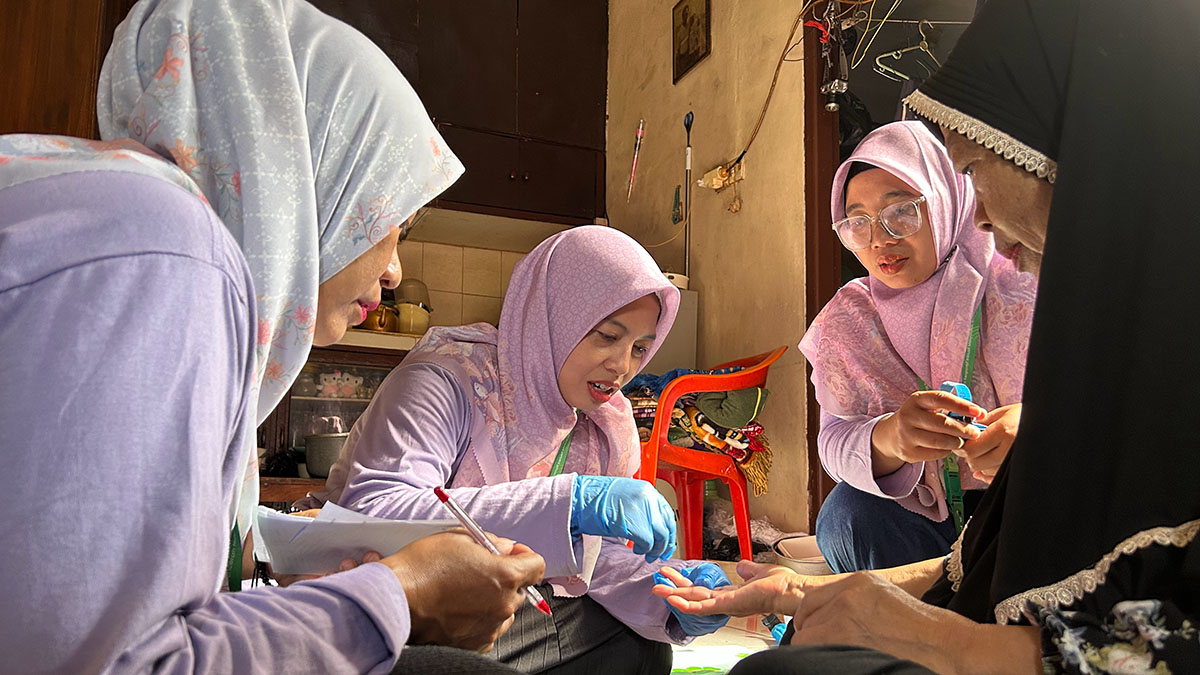 Trained PN-PRIMA community health workers conduct basic health screenings (e.g. blood sugar, cholesterol, and uric acid) for older adults at their homes in Depok City, Indonesia. (December 2025) Photo: Courtesy of the Center for Indonesia’s Strategic Development Initiatives (CISDI)
For their part, many funders across the region told us they aspire to increase their programmatic giving but struggle to find strong nonprofits able to absorb and manage larger commitments. Funders also express concerns about nonprofits’ lack of financial transparency and accountability, which undermines trust in nonprofits’ ability to deploy grants effectively. To minimize risk, many funders sidestep grantmaking to nonprofits in favor of internally staffed and managed projects. Unfortunately, some of these concerns feed a vicious cycle of underinvestment in nonprofits’ organisational capabilities, which in turn limits their ability to deploy, monitor, and demonstrate impact.
Compounding these factors, nonprofits today operate against the backdrop of tightening government budgets and a sharp decline in overseas development aid on the one hand, and rising demand for essential services from those in need on the other. For example, demographic shifts, such as the youth bulge in Indonesia and the rapidly ageing populations in Singapore and parts of Malaysia, are reshaping social needs and straining existing public safety nets.
Meeting these challenges requires a break with business as usual. The proposed shifts represent a practical agenda for action for both individual organisations and the ecosystem. Funders have an opportunity to think boldly about how to strengthen nonprofits to better serve communities in need, and nonprofits have work to do on showcasing their impact and communicating true costs to help shift funding practices. Intermediaries can do more to help nonprofits build greater organisational capacity, build awareness among funders to pay what it takes to achieve impact, and convene cross-sector dialogue that fosters government collaboration.
Across Southeast Asia, some nonprofits have demonstrated remarkable resilience and resourcefulness in achieving meaningful impact. Their lived experiences showcase how these practice shifts enhance the impact potential and resilience of the nonprofits. “The nonprofit sector is moving away from purely delivering activities on the ground towards ecosystem-level change, with more nonprofits investing in research, advocacy, and systems thinking to address root causes rather than symptoms,” says Corinna Lim, former executive director of Association of Women for Action and Research (AWARE), an advocacy organisation working to end violence against women in Singapore.
The opportunity ahead is clear. Southeast Asia’s nonprofit sector has the ambition, community trust, and growing support to achieve far greater impact. Realising that potential will require a shift in how organisations are funded and supported toward longer-term investment, stronger capabilities, and better enabling infrastructure. The question now is whether funders, intermediaries, and nonprofits will act with the urgency and coordination this moment demands – aligning the region’s growing philanthropic capital with nonprofits’ ambitions to deliver lasting impact.