
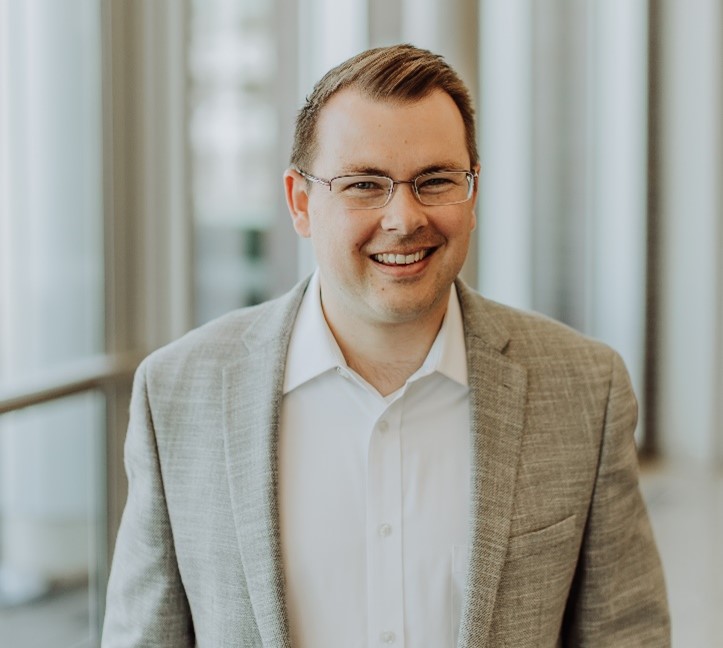
 Mike Goorhouse, Founder, Inspiring Impact and Former CEO, Community Foundation of the Holland/Zeeland Area
Jasmine Reliford: What are the moments from your career that shape your view about nonprofit durability?
Mike Goorhouse: In high school, I was part of a youth grantmaking council. In Michigan, every community foundation has a youth council that advises on grants for youth issues. The program is called the Michigan Community Foundation's Youth Project and is made possible by an endowment the W.K. Kellogg Foundation created. In our case, we were giving away $75,000 a year in grants as high school kids. Since it was an endowed fund, there are still youth grant makers having this same experience 25 years later. That was my first understanding of nonprofits and philanthropy, and when I learned about endowment. Fast-forward, I went on to run my same hometown community foundation. As a community foundation, we held and managed endowed funds, many on behalf of nonprofit organizations. This is a long way of saying: I've been talking about endowment and seeing its impact on nonprofits in action since I was 14 years old.
Reliford: That’s an amazing origin story. What are the benefits of an endowment?
Goorhouse: Organizations that have a more sustainable source of capital they control gain a lot of influence and power. An endowment is long-term capital that you control. It can imbue a sense of flexibility, taking the long view, and control of your destiny. Most organizations are not fully endowed, and most won't be, but the ability to control some element of your business model that isn't dependent on government funding, individual donors, or foundations becomes a marker of strength. Endowment is not a perfect tool. But if I ask nonprofits, most say, "I'd love to have an endowment." The question then is: Are you willing to give up a little now for the long term?
“If I ask nonprofits, most say, ‘I'd love to have an endowment.’ The question then is: Are you willing to give up a little now for the long term?”
Reliford: How has the conversation of endowments evolved over time?
Goorhouse: If you're a nonprofit trying to raise endowment dollars, you have to embrace the idea that some people won’t like the idea, no matter what you say. At the same time, there are others who will love it. I think sometimes we give too much power to those who don't like the idea of nonprofit endowments instead of acknowledging that you probably have some donors who do love it. So, what are you doing to identify and cultivate those donors?
Reliford: Are there indications that organizations are not ready for an endowment?
Goorhouse: I have examples of organizations that were less than five years old building endowments and 100-year-old organizations doing the same. Some have missions that will be timeless, and others are planning to try and work themselves out of existence. The thing that matters most is how committed the CEO is to growing an endowment because there will always be immediate challenges. I worked with an ED of a brand-new nonprofit who carved off a set percentage of every gift they received, unless a donor told them no, and put it into an endowment from day one. We're talking about when they were still bootstrapping and figuring out how to make payroll. In their third year, a donor gave them a $250,000 gift to their endowment. Why? Because they saw how committed this organization was to the long-term.
Reliford: How do nonprofits know if a donor's interested in endowment giving?
Goorhouse: I think we overcomplicate this. We learn about our donors by talking to them. If we don't ever talk about endowment, then we will never know whether they like it or not. You can say: "We've been wrestling with whether an endowment could be an important part of our business model and revenue plan going forward. What do you think?" Some donors might answer: "I don't know, not my thing." Others will tell you, "I hate endowment." And others say, "I love endowment." Now you have useful data.
Reliford: Any advice you'd give to organizations considering an endowment campaign in the current constrained funding climate?
Goorhouse: Because of growing examples of surprise funding shifts, people are much more endowment-conscious now. One tip I focus on is putting one-time gifts or estate gifts in an endowment. Since that money is not coming again, don't put it in your operating budget just to make this year’s numbers look good. That simple practice can meaningfully grow an endowment, but you have to stay disciplined.
“One tip I focus on is putting one-time gifts or estate gifts in an endowment. Since that money is not coming again, don't put it in your operating budget just to make this year’s numbers look good.”
Reliford: Are there pitfalls organizations thinking strategically about endowment should avoid?
Goorhouse: The challenge is how to get better about articulating the value of endowment. Try saying: “We can't predict the future, but we can prepare for it.” People understand that we couldn’t predict COVID or federal funding cuts, but we can prepare for such things through endowment. Another phrase I use is, “It takes a special person to plant a tree knowing that they won't fully benefit from its fruit or shade.” We benefit from those who planted trees 100 years ago, and we continue to plant trees for those who will come later. Endowment is the same idea. Some nonprofits worry that having an endowment makes them look like they have too much money, and donors won’t give to them anymore. My experience is that donors tend to give to strong institutions, not ones constantly struggling to make ends meet. Showing that you're sustainable and durable increases donors’ confidence and the size of their gifts.
Reliford: What is the relationship between endowments and racial equity?
Goorhouse: Bias is very real in decisions about which organizations are trusted with endowment capital. It is critical to think about how to democratize access to endowment so that many more organizations have the ability to weather storms, make values-driven choices without sacrificing programs, and leverage the power that comes with stability. When we think about what achieving equity means, it's about systems but also about power. Organizations that have more control of their own capital and business model have more power.
“When we think about what achieving equity means, it's about systems but also about power. Organizations that have more control of their own capital and business model have more power.”
Reliford: Is there anything else you’d like to add?
Goorhouse: We talked a lot about focusing on those who like endowment and not giving too much emphasis to those who don’t. But there are many in the middle. For those, I’d ask whether they believe your mission will matter 10, 25, or 50 years from now. If yes, it is on us to offer endowment as a more compelling giving option, believing in its transformative power.
